Why Meal Kits Are Losing the Joy of Cooking: Frive and the Race to Convenience
- Read
- 7 min
- Updated
Pictured: Roast Duck with Blackberry Shallots and Parsnip Mash
Contents
Meal kits are winning the wrong race.
Frive isn't really a meal-kit company. It delivers prepared meals, which is exactly why its growth tells us something about the wider category.
The Financial Times reported in June 2026 that Frive generated £50 million in revenue in 2025, served 30,000 households a week and had delivered more than 25 million meals. It forecast £70 million revenue for 2026.
At the same time, traditional meal kits are putting more emphasis on speed. The Times reported in March 2026 that HelloFresh orders for 15-minute meals were up 30% year on year and almost five times higher than in 2022. HelloFresh has also expanded its ready-to-eat Factor brand in Europe.
The direction of travel is obvious: fewer ingredients, fewer steps, less preparation, less cooking and less thinking, until you wonder why you'd cook at all.
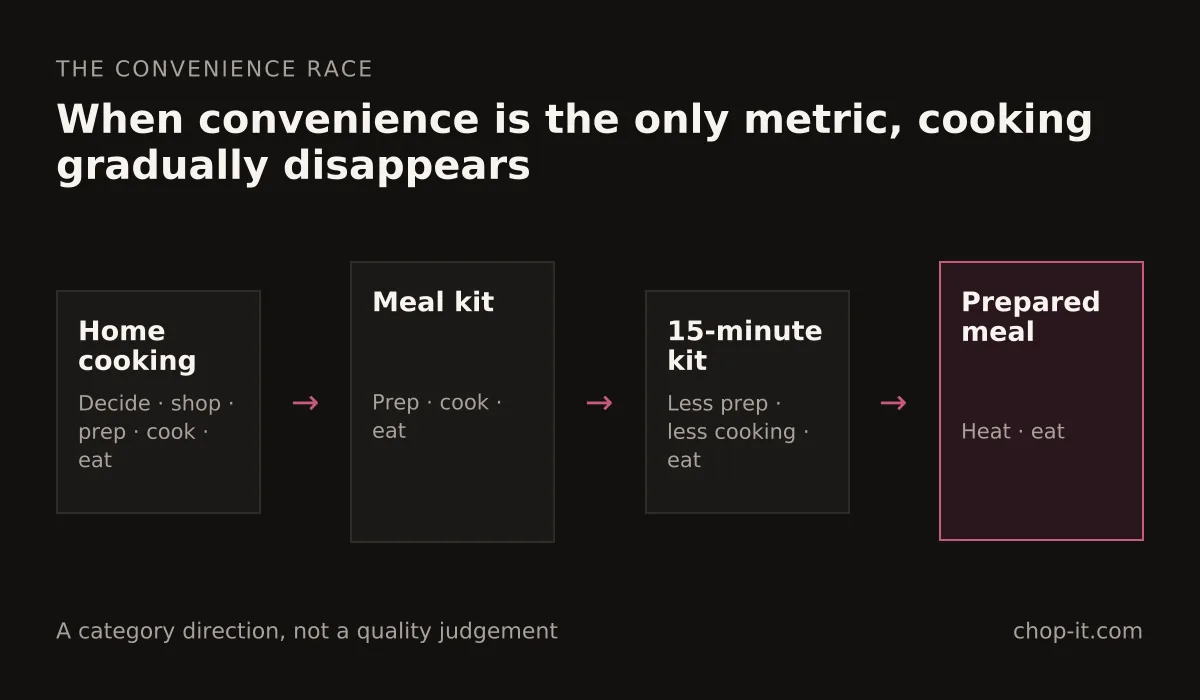
The graphic isn't a judgement on any one service. It shows the logic of the category.
Why meal kits can make cooking feel harder over time
I'm exactly the person meal kits were invented for. I enjoy food and I'm a good home cook. I also have a busy job, a family and very little interest in spending Sunday afternoon on a spreadsheet about what everyone's going to eat for the next seven days.
So at first meal kits felt brilliant. Someone else decided dinner, the ingredients arrived portioned and there was nothing to remember.
After a few months I got bored and switched services. Then I switched again, and again. About a year in, I noticed something strange.
I hadn't stopped liking food. I'd forgotten how to feed myself.
Not literally, obviously. But I'd lost the habits that made me a good home cook. I wasn't saving recipes I loved, building a repertoire or looking in the fridge and thinking, “I could make something with that.”
Dinner had become an assembly task: open the bag, follow the card, eat it, repeat. After a while, even perfectly decent meals started to feel a bit like prison food to me. The food wasn't bad. It was prescribed.
The joy of cooking had slowly been replaced by the efficiency of completing dinner.
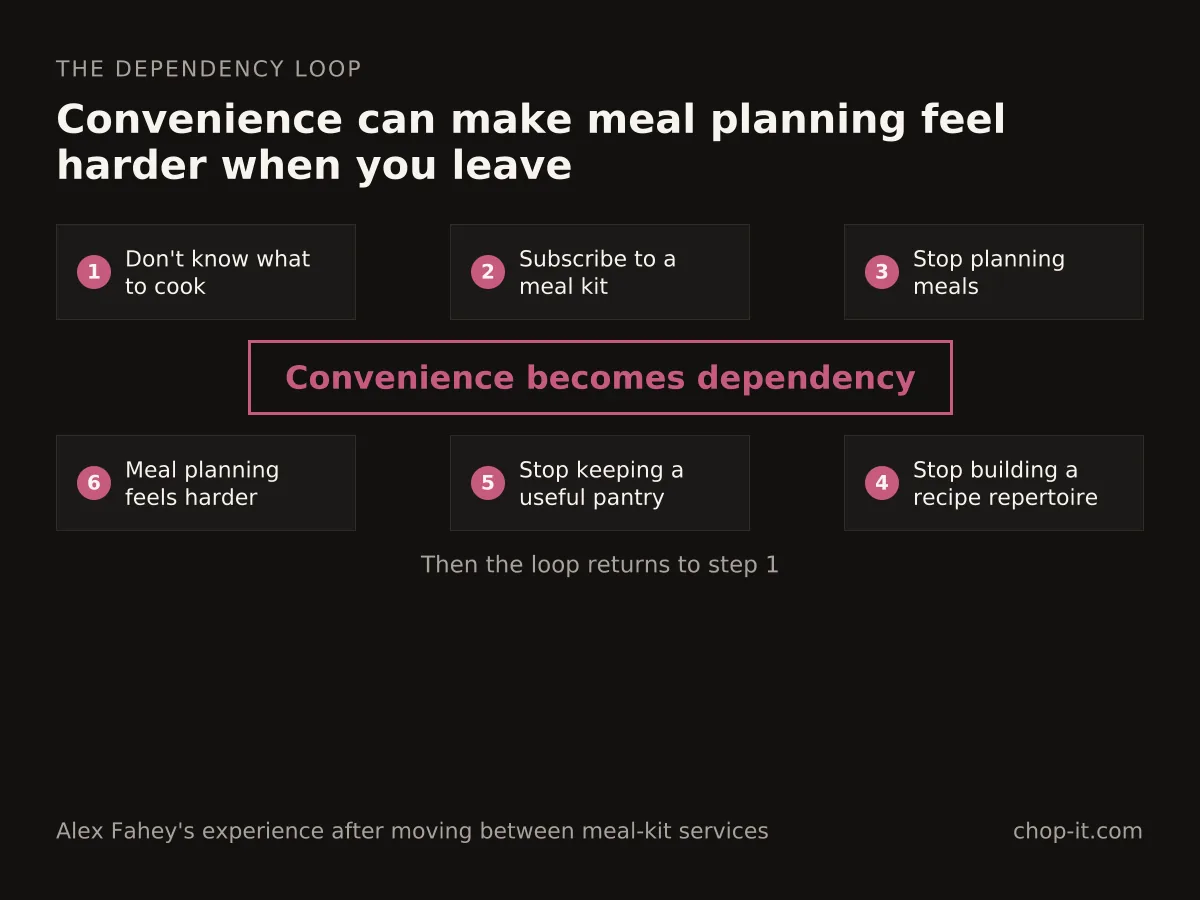
This was my experience, not a universal verdict. Plenty of people use meal kits happily for years. But the loop explains why changing provider every few months never solved my problem. I was outsourcing the habit I needed to rebuild.
Why Frive is the logical conclusion of the convenience race
That's why I find Frive's growth interesting. I don't read it as evidence that people have stopped caring about food. It shows what happens when time becomes the main problem a category is trying to solve.
If I'm already choosing from somebody else's weekly menu, receiving exactly the ingredients they specify and following exactly their instructions, it's reasonable to ask why I'm doing the cooking bit. Frive's answer is that you aren't. The meal arrives made.
That's an entirely legitimate product, and clearly one that many households want. It also shows the direction the market has been moving in.
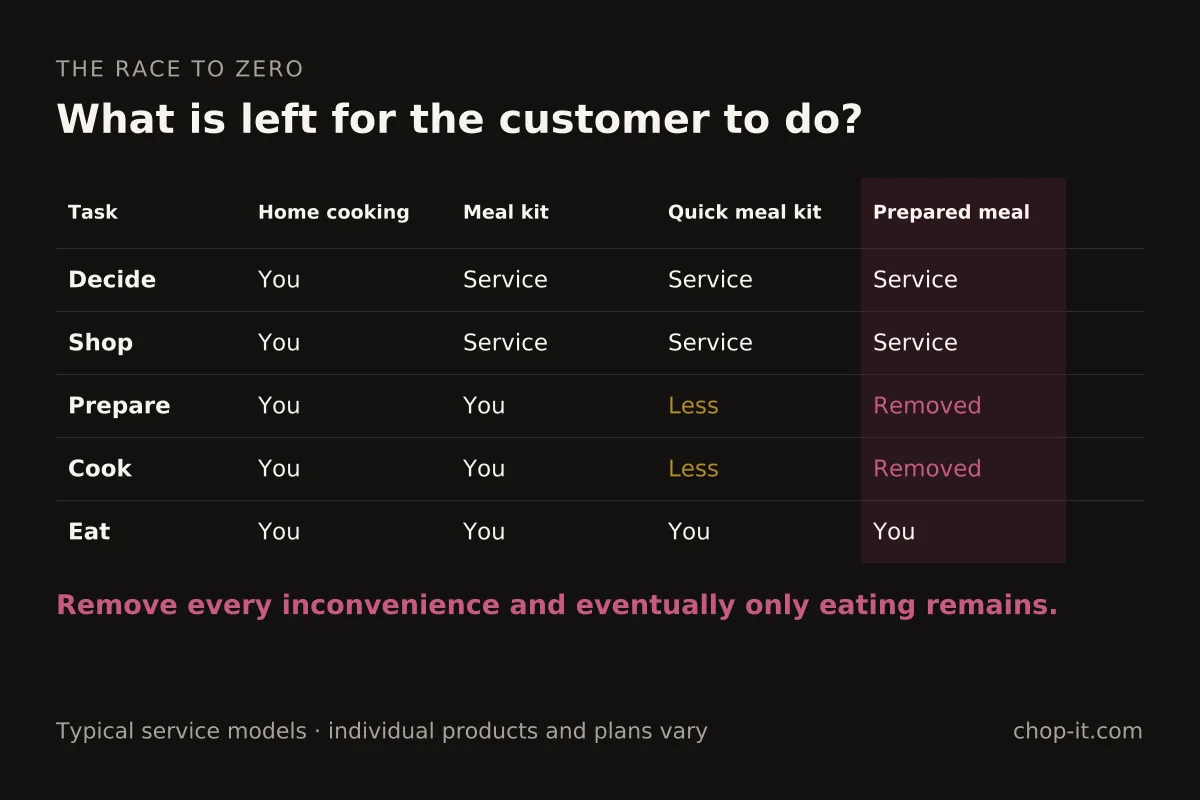
Traditional home cooking asks you to decide, shop, prepare, cook and eat. A meal kit usually removes deciding and most shopping. Faster kits reduce preparation and cooking. A prepared-meal service leaves the eating.
If every inconvenience is removed, eventually the only thing left is eating.
There has to be something between doing all the work yourself and outsourcing dinner completely. That's the gap I built Chop it to fill.
The missing middle: remove the admin, keep the cooking
I didn't want technology to decide what I was allowed to cook. I wanted it to do the boring work around cooking.
I should be able to find a recipe anywhere, keep it and build my own collection rather than live inside somebody else's catalogue. With ten minutes on Sunday, I should be able to look through dinner ideas and swap the ones I don't fancy. If I want a healthy reset this week, or comfort food, the system should adapt. If I open the fridge and need to use chicken, spinach and half a tub of crème fraîche, I should be able to start there. And if I change my mind on Wednesday, nothing should break.
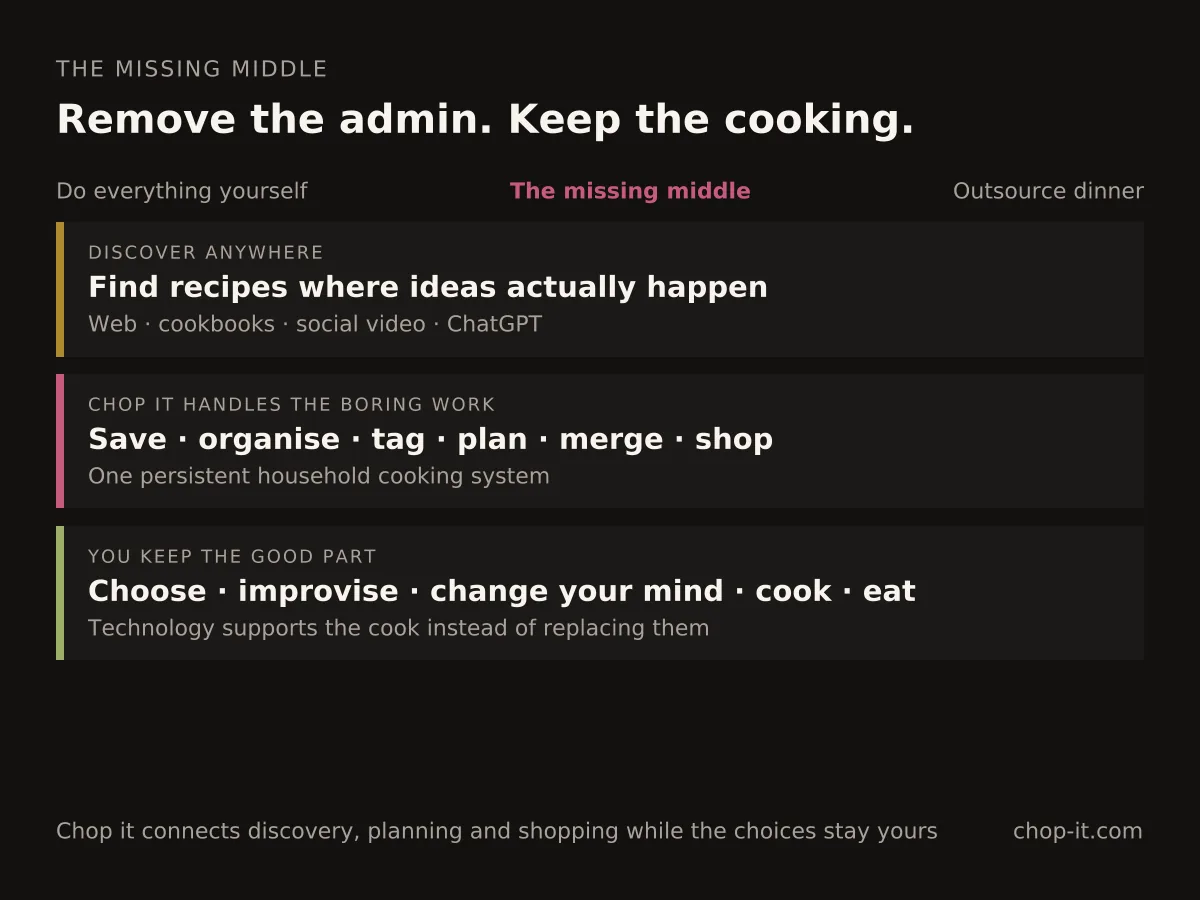
That is the missing middle:
- Discover anywhere: websites, cookbooks, social video and ChatGPT.
- Let Chop it handle the boring work: save, organise, tag, plan, merge and shop.
- Keep the good part: choose, improvise, change your mind, cook and eat.
The meal planning apps I compared for 2026 take very different approaches to this. The distinction that matters is whether the plan belongs to the service or stays useful as part of your own cooking system.